

It’s a frustrating moment when chewing gum sticks to your favorite clothes. Millions of people worldwide face this issue every year, resulting in unwanted tears and frustration. Removing chewing gum can seem like a daunting task, but there are several easy methods to tackle this problem.
From using household items for stain removal to applying specialized laundry detergent, there are various approaches to remove gum effectively. This article will guide you through the most effective techniques, ensuring you can enjoy your clothes without the worry of stubborn gum residue.
Key Takeaways
- Effective methods to remove chewing gum from clothes.
- Household items that can aid in stain removal.
- The role of laundry detergent in removing gum.
- Precautions to prevent gum from sticking to clothes.
- Expert advice for tackling stubborn gum residue.
Why Gum Sticks to Fabric and Why It’s Challenging to Remove
Understanding why gum sticks to clothing is crucial for effective removal. Chewing gum is made from a mixture of elastomers, resins, fats, and waxes, which give it a sticky and elastic nature. This composition allows gum to adhere strongly to various surfaces, including fabric.
The Science Behind Gum’s Sticky Nature
The stickiness of gum is primarily due to its chemical composition. The elastomers in gum, such as rubber, provide elasticity, while resins and waxes contribute to its adhesive properties. When gum comes into contact with fabric, these components intertwine with the fabric’s fibers, creating a strong bond that is difficult to break.
The adhesion process involves several factors:
- The type of fabric: Natural fibers like cotton and wool can be more prone to gum sticking than synthetic fibers.
- The temperature and humidity: Higher temperatures and humidity levels can make gum softer and more adhesive.
- The amount of gum: Larger amounts of gum can be more challenging to remove.
Common Scenarios for Getting Gum on Clothes
Gum can end up on clothes in various everyday situations. Some common scenarios include:
| Scenario | Description |
|---|---|
| Accidental contact | Touching or sitting on surfaces where gum has been left behind. |
| Children’s play | Kids often handle gum carelessly, leading to accidental transfers to clothing. |
| Public places | Movie theaters, public transportation, and schools are common areas where gum can be found on seats or floors. |
As noted by a cleaning expert, “The key to removing gum is understanding its composition and how it interacts with fabric.”
“Gum removal requires patience and the right techniques. It’s not just about pulling it off, but doing so without damaging the fabric.”
By recognizing the scenarios where gum is likely to be a problem and understanding its sticky nature, we can better prepare to tackle the issue of gum removal from clothing.
Essential Tools and Supplies for Gum Removal
To tackle the sticky problem of gum on clothes, you’ll need to assemble a few simple yet effective tools and supplies. Having the right materials not only makes the process easier but also increases the chances of successful gum removal without damaging your clothing.
Household Items You’ll Need
Most of the necessary items for gum removal are likely already in your home. These include:
- Ice cubes or an ice pack
- A dull knife or scraper
- Paper towels or a clean cloth
- A hairdryer (for heat-based removal methods)
- Peanut butter or other adhesive-breaking substances
These household items are the first line of defense against gum on clothes. Using them effectively can save you time and money.
Optional Commercial Products
For more stubborn gum or for those who prefer a specialized solution, several commercial products are available. These include:
- Goo Gone or similar adhesive removers
- Stain removers or pre-treatment products
- Freezing sprays designed for gum removal
While not necessary for every gum removal task, these products can be invaluable in difficult cases.
Setting Up Your Workspace
Before you begin, it’s essential to set up your workspace properly. This means:
- Clearing a flat surface to work on
- Covering the surface with newspaper or a plastic tablecloth to prevent damage
- Having a trash bin nearby for disposing of used materials
A well-prepared workspace makes the gum removal process more efficient and less messy.
| Tool/Supply | Purpose | Availability |
|---|---|---|
| Ice Cubes/Ice Pack | Freezing the gum | High |
| Dull Knife/Scraper | Scraping off frozen gum | High |
| Goo Gone | Dissolving remaining gum residue | Medium |
| Hairdryer | Applying heat to melt gum | High |
The Freezing Method: Using Ice to Remove Gum
One of the most reliable methods for removing gum from clothing involves using ice to freeze it solid. Gum with ice could hardens the gum, making it easier to remove without spreading it further or pushing it deeper into the fabric.
Step-by-Step Ice Cube Technique
To use the ice cube method, follow these simple steps:
- Place a few ice cubes in a plastic bag or wrap them in a cloth to avoid direct contact with the fabric.
- Position the ice pack on the gum and let it sit until the gum is frozen solid.
- Once frozen, use a blunt tool like a butter knife or a credit card to gently scrape off the gum.
- Repeat the process if any gum remains after the first scrape.
When to Use the Freezer Instead
For particularly stubborn pieces of gum or for delicate fabrics, placing the clothing item in the freezer can be a better option than using ice cubes. This method ensures the gum is frozen thoroughly without risking damage from scraping while the gum is still somewhat pliable.
To use the freezer method:
- Place the garment in a plastic bag to prevent other items from getting contaminated with gum residue.
- Leave the garment in the freezer for a few hours until the gum is frozen.
- Remove and immediately scrape off the gum as described in the ice cube method.
Tips for Effectively Scraping Frozen Gum
Scraping off frozen gum requires some care to avoid damaging the fabric. Here are some tips:
- Use a blunt tool to avoid cutting or tearing the fabric.
- Scrape gently in one direction to remove the gum.
- If some gum residue remains, you can try repeating the freezing process or using a small amount of adhesive remover.
Here’s a comparison of the ice cube and freezer methods:
| Method | Best For | Time Required |
|---|---|---|
| Ice Cube | Quick removal, most fabrics | 10-20 minutes |
| Freezer | Delicate fabrics, stubborn gum | A few hours |
Heat-Based Techniques for Gum Removal
Applying heat is a simple yet effective way to remove stubborn gum from clothing. This method works by melting the gum, making it easier to remove from fabric. There are several heat-based techniques you can use, depending on the type of fabric and the equipment you have available.
Using an Iron and Paper Bag Method
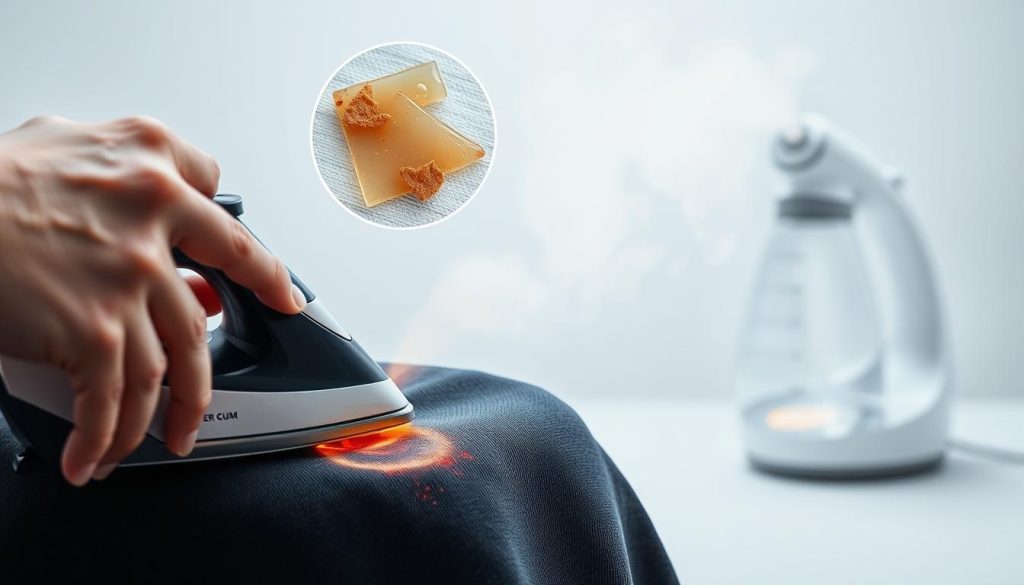
One popular heat-based method involves using an iron and a paper bag. To do this, place a paper bag over the gum and run a hot iron over it. The heat will melt the gum, causing it to stick to the paper bag. Once the gum is stuck to the bag, you can remove it from the clothing. It’s essential to be cautious not to press too hard, as this could damage the fabric or push the gum further into it.
Hairdryer Technique for Delicate Fabrics
For more delicate fabrics, a hairdryer can be a safer alternative to an iron. Simply heat the gum with the hairdryer until it becomes soft and pliable. Once heated, you can gently scrape off the gum with your fingers or a blunt tool like a butter knife. Be careful not to apply too much heat, as this could damage some fabrics.
Safety Precautions When Using Heat
When using heat to remove gum, it’s crucial to take safety precautions to avoid damaging your clothes or causing injury. Always test a small, inconspicuous area of the fabric first to ensure it can withstand the heat. Keep the heat source moving to prevent scorching, and avoid using heat on fabrics that are sensitive to temperature changes, such as silk or wool.
Key safety tips:
- Test fabric for heat sensitivity before applying heat.
- Keep the heat source moving to avoid scorching.
- Avoid using heat on sensitive fabrics.
Liquid Solutions That Dissolve Gum
Dissolving gum with liquid solutions is a method many find effective for removing stubborn gum from clothes. This approach can be particularly useful when other methods like freezing or heating haven’t worked.
Several liquid solutions can help dissolve gum, making it easier to remove from clothing. Let’s explore some of the most effective options.
Vinegar and Lemon Juice Applications
Vinegar and lemon juice are two common household items that can help dissolve gum. The acidity in these liquids breaks down the gum’s sticky properties, making it easier to remove. To use vinegar, simply soak the affected area in a bowl of white vinegar for a few hours or overnight. For lemon juice, apply it directly to the gum and let it sit for a while before attempting to remove the gum.
Tip: After applying either vinegar or lemon juice, use a soft-bristled brush or your fingers to gently scrape off the gum. Repeat the process if necessary until the gum is completely removed.
Using Rubbing Alcohol Effectively
Rubbing alcohol is another effective liquid for dissolving gum. It works by breaking down the gum’s adhesive properties, making it easier to lift off the fabric. Apply rubbing alcohol to the gum using a cotton ball or swab, and let it sit for a few minutes. Then, gently scrape off the gum with a blunt tool or your fingers.
Caution: Always test a small, inconspicuous area of the fabric first to ensure the rubbing alcohol doesn’t damage the material.
Commercial Products Like Goo Gone
For particularly stubborn gum, commercial products like Goo Gone can be highly effective. These products are specifically designed to dissolve and remove sticky substances, including gum. Follow the product’s instructions for application and removal. Typically, you’ll apply the product to the gum, let it sit for a specified time, and then wipe or scrape away the gum.
- Goo Gone and similar products are available at most hardware stores and home goods retailers.
- Always follow the product’s instructions and take necessary safety precautions.
- Test a small area first to ensure the product doesn’t damage the fabric.
By using these liquid solutions, you can effectively dissolve and get rid of gum from your clothes, saving you from the frustration of dealing with stubborn gum residue.
Can Dry Cleaners Get Gum Out of Clothes?
Gum on clothes can be a sticky situation, but professional dry cleaners have techniques to tackle the problem. When you’ve tried various DIY way to remove gum from your clothing without success, it might be time to seek professional help.
Professional Techniques Used by Dry Cleaners
Dry cleaners employ a variety of techniques to remove gum from clothes, depending on the type of fabric and the extent of the gum’s adherence. One common method involves using specialized solvents that can dissolve the gum without damaging the fabric. These solvents are often more effective than household products and can be tailored to the specific type of material being cleaned.
Another technique dry cleaner might use is a combination of heat and pressure to loosen and remove the gum. This method requires careful control to avoid damaging the fabric, a task that professionals are well-equipped to handle.
When to Choose Professional Cleaning Over DIY
If you’ve tried removing gum from your clothes at home without success, or if the garment is made of a delicate material, it’s likely time to take it to a professional dry cleaner. Fabrics like silk, wool, or suede require special care, and attempting to remove gum from these materials without the right expertise can result in damage.
Additionally, if the gum has been on the clothing for an extended period or has penetrated deeply into the fabric, a dry cleaner’s advanced techniques and equipment may be necessary to fully remove it.
Cost Considerations for Professional Gum Removal
The cost of having gum removed from clothes by a dry cleaner can vary depending on several factors, including the type of fabric, the size of the garment, and the extent of the gum’s adherence. Generally, dry cleaners will assess the stain and provide a quote based on the complexity of the removal process.
While there’s a cost associated with professional gum removal, it’s often worth it for the peace of mind and the assurance that your garment is being handled by experts.
What to Tell Your Dry Cleaner About the Gum Stain
When you take your garment to a dry cleaner, it’s helpful to provide as much information as possible about the gum stain. Let them know when the gum adhered to the clothing, what you’ve tried so far to remove it, and any concerns you have about the fabric.
This information can help the dry cleaner choose the most effective method for removing the gum and ensure that your garment is treated appropriately.
Special Considerations for Different Fabric Types
The success of gum removal largely depends on understanding the fabric you’re dealing with. Different fabrics have unique properties that require tailored approaches for effective gum removal.
Removing Gum from Delicate Fabrics
Delicate fabrics such as silk, lace, or chiffon demand extra care. When dealing with these materials, it’s crucial to avoid using harsh chemicals or excessive force, which can damage the fabric. Instead, opt for gentle methods like the freezing technique or using a small amount of a mild adhesive remover.
Gently scraping off the gum with a blunt tool, like a credit card, can also be effective for delicate fabrics. It’s essential to test any removal method on an inconspicuous area first to ensure it won’t damage the fabric.
Techniques for Wool, Cotton, and Synthetic Materials
Wool, cotton, and synthetic materials like polyester or nylon can generally withstand more rigorous gum removal techniques. For these fabrics, methods such as using heat (with caution), freezing, or applying solvents like rubbing alcohol can be effective.
- For wool, avoid using hot water or high heat, as it can felt the fabric.
- Cotton fabrics can usually handle a variety of methods, including the use of commercial gum removers.
- Synthetic materials may respond well to freezing or the application of a solvent.
Special Care for Suede and Leather
Suede and leather require specialized care due to their unique textures and finishes. For suede, gently brushing the area with a suede brush after freezing the gum can be effective. For leather, applying a small amount of leather conditioner or oil after removing the gum can help restore the leather’s finish.
Handling Acetate and Other Sensitive Fabrics
Acetate and other sensitive fabrics can be particularly challenging. These fabrics may require professional cleaning, especially if the gum has penetrated deeply or if you’re unsure about the best removal method.
A table summarizing the recommended gum removal techniques for different fabric types is provided below:
| Fabric Type | Recommended Removal Technique | Special Considerations |
|---|---|---|
| Delicate Fabrics (Silk, Lace, Chiffon) | Freezing, Gentle Scraping | Avoid harsh chemicals and excessive force |
| Wool | Freezing, Gentle Heat | Avoid hot water and high heat |
| Cotton | Heat, Freezing, Solvents | Can handle various methods |
| Synthetic Materials (Polyester, Nylon) | Freezing, Solvents | May respond well to commercial removers |
| Suede | Freezing, Suede Brush | Gently brush after freezing |
| Leather | Gentle Scraping, Leather Conditioner | Apply conditioner after removal |
| Acetate and Sensitive Fabrics | Professional Cleaning | May require specialized care |
After Removal: Treating Residual Stains
After successfully removing gum from your clothes, the next step is to tackle any residual stains that may have been left behind. Even after the gum is gone, the area where it was stuck can still be discolored or sticky. Treating these residual stains properly will help restore your clothes to their original condition.
Laundry Detergent Methods
One of the simplest ways to treat residual stains is by using laundry detergent directly on the affected area. Apply a small amount of detergent to the stain, gently rub it in, and let it sit for a few minutes before washing. This method is effective for most fabric types and can help remove any remaining stickiness or discoloration.
For tougher stains, you can use a laundry pre-treater or a solution of equal parts warmest water recommended and laundry detergent. Soak the stained area for about 15 minutes before washing. This can help loosen and remove the stain more effectively.
Stain Removers for Persistent Marks
If the residual stain is particularly stubborn, you may need to use a specialized stain remover. Products like OxiClean or Shout can be applied directly to the stain, following the product’s instructions. These products are designed to tackle tough stains and can be very effective.
For protein-based stains or those caused by adhesive residue, an enzyme-based stain remover can be particularly useful. These products break down the proteins or other complex molecules causing the stain, making it easier to remove during washing.
When to Wash After Gum Removal
It’s generally recommended to wash your clothes as soon as possible after removing the gum and treating any residual stains. This helps prevent any remaining residue from setting into the fabric, making it harder to clean later.
Check the care label on your garment to ensure you’re using the appropriate wash cycle. For delicate fabrics, a gentle cycle with cold water is usually best. For more robust fabrics, a normal or heavy-duty cycle may be appropriate.
| Stain Type | Recommended Treatment | Wash Cycle |
|---|---|---|
| General Residual Stain | Laundry Detergent | Normal |
| Stubborn Stain | Stain Remover (e.g., OxiClean) | Heavy Duty |
| Delicate Fabric Stain | Gentle Laundry Detergent | Gentle/Cold |
What to Do When Standard Methods Fail
If standard gum removal techniques fail, don’t give up – there are alternative solutions. Dealing with stubborn gum can be frustrating, but there are still ways to tackle it. When the usual methods don’t work, it’s time to think creatively and try new approaches.
Combining Multiple Techniques
Sometimes, a single method isn’t enough to remove gum completely. In such cases, combining multiple techniques can be highly effective. For instance, you can start by freezing the gum to harden it, then use a scraping tool to remove the bulk of the gum. After that, apply a liquid solution like rubbing alcohol or vinegar to dissolve any remaining residue.
Another effective combination is using heat along with a scraping tool. Apply heat using a hairdryer to soften the gum, then gently scrape it off with a blunt tool. Be cautious not to damage the fabric.
Specialized Products for Stubborn Gum
For particularly stubborn gum, specialized products can be a lifesaver. Products like Goo Gone or other adhesive removers are designed to dissolve sticky substances. Apply the product to the affected area, let it sit for a few minutes, and then gently scrape off the gum.
It’s essential to follow the product instructions and test a small, inconspicuous area first to ensure the product doesn’t damage the fabric.
When to Consider the Garment a Loss
Unfortunately, not all gum stains can be removed, especially if the gum has had time to set or if it’s on a delicate fabric. In such cases, it might be more practical to consider the garment a loss. However, before giving up, it’s worth trying some last resort attempts.
Creative Solutions for Last Resort Attempts
For last resort attempts, some people swear by unconventional methods. For example, using peanut butter or toothpaste can sometimes help loosen the gum. Apply a small amount to the gum, work it in, and then scrape off the gum. These methods can be hit or miss, so proceed with caution.
Another creative solution is using a freezing spray if you don’t have ice cubes handy. Spray the gum until it’s frozen, then scrape it off. This method can be particularly useful for delicate fabrics or when you need a quick fix.
Unusual but Effective Gum Removal Tricks
The struggle to remove gum from clothing can be won with some unusual yet effective tricks up your sleeve. While conventional methods like freezing or using heat are well-known, there are other creative ways to tackle this sticky problem.
The Peanut Butter Method
One of the more unconventional techniques involves using peanut butter. The oils in peanut butter can help break down the gum, making it easier to remove. Simply apply a generous amount of peanut butter to the affected area, let it sit for a few minutes, and then gently scrape off the gum.
Toothpaste Technique
Toothpaste is another unexpected hero for gum removal. The abrasives in toothpaste can help loosen the gum’s grip on fabric. Apply a small amount of toothpaste to the gum, toothbrush it in gently, and then scrape off the gum with a blunt tool like a butter knife.
Freezing Spray Alternatives
For those without access to a freezer or who prefer a quicker method, freezing spray can be a valuable alternative. Spray the affected area until it’s frozen solid, and then scrape off the gum. This method is particularly effective for delicate fabrics that can’t withstand the rigors of a freezer.
Dishwashing Liquid Applications
Dishwashing liquid can also be used to help dissolve and remove gum. Mix a small amount with warm water, apply it to the gum, and let it sit before attempting to remove the gum. This method is gentle on most fabrics and can be particularly effective for synthetic materials.
These unusual tricks offer a range of solutions for removing gum from clothes, from the kitchen to the bathroom. By having these methods at your disposal, you’re better equipped to tackle this common problem with ease.
Conclusion: Keeping Your Clothes Gum-Free
Removing gum from clothes can be a challenging task, but with the right techniques and tools, it’s achievable. By understanding why gum sticks to fabric and using methods like freezing, heat, or liquid solutions, you can effectively remove gum and keep your clothes looking their best.
To maintain your clothing and prevent future gum mishaps, consider implementing a few simple habits. Regularly checking your clothes for gum before washing and drying can help prevent the gum from setting in. Additionally, being mindful of your surroundings and avoiding contact with gum can reduce the risk of getting it on your clothes.
By following the gum removal tips outlined in this article, you can confidently tackle gum-related mishaps and keep your clothes gum-free. Whether you’re dealing with delicate fabrics or everyday clothing, the right techniques and a bit of patience can make all the difference in maintaining your clothing.
FAQ
How do I get gum out of clothes?
Will dry cleaning remove gum from clothes?
Can I remove gum from delicate fabrics?
How do I remove gum from suede or leather?
What if the gum has left a stain after removal?
Can I use toothpaste to remove gum from clothes?
How do I prevent gum from sticking to clothes in the future?
Can I put clothes with gum in the dryer?
Are there any specialized products for removing gum?
Can I use a hairdryer to remove gum from clothes?

Want your laundry picked up?
Easy Life Laundry collects from your hotel, apartment or office in 41 Chinese cities, washes, dries and folds by the kilo, and brings everything back — usually the next day. English-speaking service, itemised bills and photo updates.


