

Have you ever spent hours cleaning your rug or carpet, only to be left with unsightly waves and ripples? It’s a frustrating problem that can make your freshly cleaned rug look worn out and unkempt.
This issue is more common than you think, and it’s not just about aesthetics. Wavy rugs can be a tripping hazard and can also harbor dust and dirt, undoing all your hard cleaning work. Fortunately, there are effective ways to flatten your rug and eliminate those unwanted waves.
Key Takeaways
- Understand why rugs become wavy after cleaning
- Learn simple methods to flatten your rug
- Discover tips to prevent future waviness
- Explore professional techniques for stubborn waves
- Find out how to maintain your rug’s appearance
Why Rugs Develop Waves After Cleaning
Understanding why rugs develop waves after cleaning is crucial for maintaining their appearance and longevity. The process of cleaning a rug can significantly impact its structure and stability, sometimes leading to the formation of unwanted waves or ripples.
The Science Behind Rug Buckling and Fiber Expansion
Rug buckling is often a result of the physical changes that occur in the rug’s fibers during the cleaning process. When a rug is exposed to water or cleaning solutions, its fibers can expand. This expansion, if not properly managed, can lead to buckling or wavy patterns on the rug’s surface. The type of fiber, whether it’s wool, synthetic, or a blend, plays a significant role in how the rug reacts to cleaning. For instance, wool fibers tend to felt and shrink when exposed to excessive moisture, while synthetic fibers may become misshapen due to the cleaning process.
Fiber expansion is a critical factor in rug buckling. As fibers absorb moisture, they swell, and if the drying process is not thorough or is uneven, it can result in parts of the rug shrinking or expanding at different rates, leading to waves.
How Different Cleaning Methods Affect Rug Stability
The method used to clean a rug can significantly impact its stability. Different cleaning techniques can either minimize or exacerbate the risk of rug buckling. For example, hot water extraction can cause more moisture absorption than dry cleaning methods, potentially leading to more pronounced fiber expansion and subsequent buckling.
“The cleaning method can either preserve or compromise the integrity of a rug. Understanding the most appropriate cleaning technique for your specific rug type is essential.”
The Role of Moisture and Drying Techniques
Moisture is a double-edged sword when it comes to rug cleaning. While it’s necessary for removing dirt, excessive moisture can lead to buckling. The key lies in the drying techniques used after cleaning. Proper drying involves not just removing excess water but also ensuring that the rug dries evenly. Techniques such as using fans or dehumidifiers can help control the drying process, minimizing the risk of waves forming.
Effective drying techniques are crucial in preventing rug buckling. Ensuring good airflow and using equipment like dehumidifiers can help in managing the moisture levels within the rug, thereby reducing the likelihood of waves.
Assessing Your Wavy Rug Situation
To tackle the issue of a wavy rug, start by evaluating its current state. This initial assessment is crucial for determining the best approach to flatten your rug.
Measuring the Severity of Waves and Ripples
Begin by measuring the severity of the waves and ripples on your rug. Take note of the height and width of the waves to understand the extent of the issue. This measurement will help you decide whether you need a simple fix or a more complex solution.
For minor waves, you might be able to get away with simple DIY techniques. However, more severe waviness may require professional intervention or specialized equipment.
Identifying Your Rug Material and Construction Type
The next step is to identify the material and construction type of your rug. Different materials respond differently to various flattening techniques. For instance, wool rugs can often be reshaped using moisture and heat, while synthetic rugs might require different approaches.
Check the label or manufacturer’s information to determine the rug’s material and construction. This information is vital for choosing the right flattening method.
Creating a Flattening Plan Based on Your Assessment
With your assessment complete, you can now create a flattening plan tailored to your rug’s specific needs. Consider factors such as the rug’s size, material, and the severity of the waviness.
Your plan might include techniques such as reverse rolling, applying heavy objects, or using heat and moisture. In some cases, you may need to combine multiple methods to achieve the desired result.
By following this structured approach, you’ll be well on your way to resolving the issue of your wavy rug and restoring it to its original flat state.
Quick Fixes for Minor Rug Waves
Minor rug waves can be addressed with some simple and effective techniques that don’t require professional help. These quick fixes can help you flatten your rug and restore its original appearance.
The Reverse Rolling Technique for Immediate Results
One of the most effective methods for fixing minor rug waves is the reverse rolling technique. This involves rolling your rug tightly in the opposite direction of the wave. By doing so, you’re essentially “re-training” the rug fibers to lie flat. To implement this technique, start by rolling the rug in the opposite direction of the wave, then secure it with tape or straps. Leave it rolled for a few hours or overnight before unrolling it. This method can provide immediate results and is particularly effective for synthetic rugs.
Strategic Placement of Heavy Objects for 24-48 Hours
Another simple yet effective method is to place heavy objects on the wavy area. This technique works by applying consistent pressure to the affected area, helping to flatten out the waves. Choose heavy, flat objects like books or weighted boxes and place them on the wavy sections. Leave these objects in place for 24 to 48 hours to allow the rug fibers to adjust. This method is particularly useful for areas with minor waves and can be used in conjunction with other techniques for better results.
Targeted Vacuuming to Pull Out Ripples
Targeted vacuuming is a gentle and non-invasive method to address minor rug waves. By using the suction power of your vacuum cleaner, you can help pull out ripples and waves. To do this effectively, use the vacuum’s upholstery attachment or a handheld vacuum with a gentle suction setting. Slowly and carefully vacuum the wavy area, working in the direction of the fibers. This method is safe for most rug types and can be repeated as needed until you achieve the desired flatness.
How to Get Waves Out of a Rug After Cleaning: Step-by-Step Methods
Removing waves from a rug after cleaning can be a challenging task, but with the right techniques, you can restore your rug to its original flat state. The key is to apply the appropriate method based on the severity of the waves and the type of rug you have.
Method 1: Reverse Roll and Weight Application
The reverse roll technique is a simple yet effective way to remove waves from a rug. To start, roll your rug in the opposite direction of the wave. This helps to counteract the curl and flatten the rug.
Once you’ve rolled the rug, apply weights to keep it in place. You can use heavy objects like books or specialized rug weights. Leave the rug rolled for several hours or overnight to allow the fibers to adjust.

Method 2: The Sunlight and Heat Method
Another effective method for removing waves from a rug is by utilizing sunlight and heat. Place your rug in direct sunlight, ensuring that it’s exposed to the sun’s rays evenly. The heat will help relax the fibers, reducing the appearance of waves.
For synthetic rugs, you can also use a hairdryer on a low setting to apply heat directly to the wavy areas. Be cautious not to apply too much heat, as this can damage the rug fibers.
| Method | Rug Type | Effectiveness |
|---|---|---|
| Reverse Roll and Weight | All | High |
| Sunlight and Heat | Synthetic | Medium |
By following these step-by-step methods, you can effectively remove waves from your rug after cleaning. Remember to be patient and gentle when handling your rug to avoid causing further damage.
Using Heat and Moisture Safely to Remove Rug Waves
Heat and moisture can be powerful allies in removing rug waves, but they must be used with care. When applied correctly, these elements can relax the fibers in your rug, allowing it to lie flat once again.
The Steam Iron Technique for Synthetic Rugs
For synthetic rugs, the steam iron technique can be particularly effective. This method involves using a steam iron to apply controlled heat and moisture directly to the wavy areas. To do this safely, set your steam iron to a low or medium setting to avoid damaging the rug fibers.
Place a damp cloth over the wavy area to help distribute the heat and moisture evenly. Then, gently iron over the cloth, moving the iron in a circular motion to prevent scorching. Be cautious not to leave the iron in one spot for too long, as this can cause damage.
Controlled Dampening and Drying Methods
Controlled dampening is another technique that can help remove rug waves. This involves lightly misting the wavy areas with water and then allowing the rug to dry naturally. It’s essential to avoid soaking the rug, as excessive moisture can lead to further buckling or damage.
To enhance the drying process, you can use fans to circulate air around the rug or employ a dehumidifier to reduce moisture in the air. This balanced approach to dampening and drying helps to relax the rug fibers without causing additional stress.
By carefully applying heat and moisture, you can effectively remove waves from your rug and restore its original appearance.
Material-Specific Solutions for Wavy Rugs
When it comes to flattening a wavy rug, the material it’s made of plays a crucial role in determining the best approach. Different rug materials have unique properties that require specific techniques to restore their flatness.
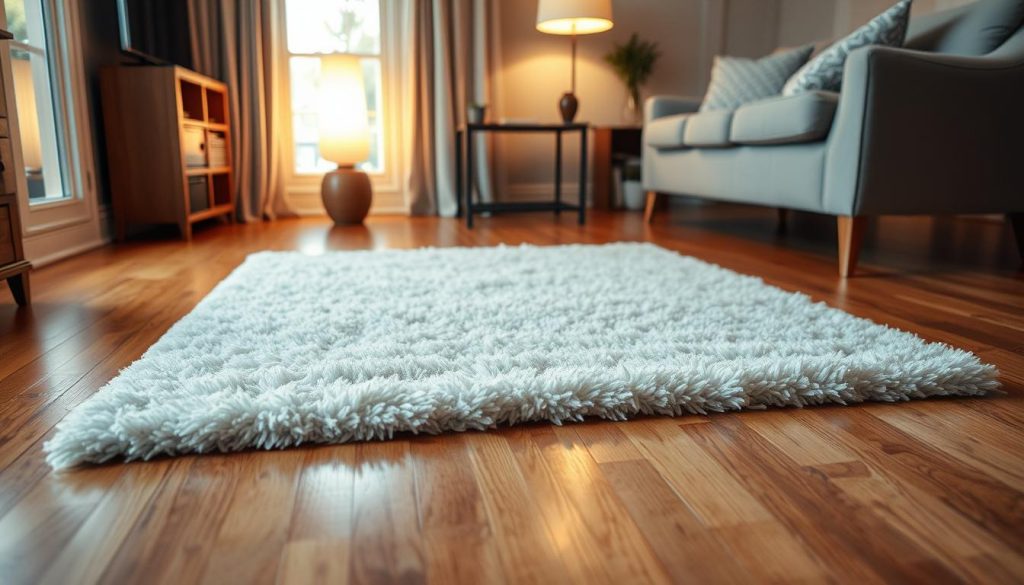
Wool Rug Flattening: Gentle Techniques That Preserve Fibers
Wool rugs require gentle care to maintain their natural fibers and texture. To flatten a wool rug, start by gently rolling it in the opposite direction of the wave. This helps to relax the fibers. Then, place the rug on a flat surface and apply weights, such as heavy books or furniture, to keep it in place. Allow the rug to dry completely, which may take several days.
For more stubborn waves, you can use a steam cleaner on a low setting to help relax the wool fibers. Be cautious not to over-saturate the rug, as this can lead to further distortion.
Synthetic and Polypropylene Rug Correction Methods
Synthetic and polypropylene rugs are generally more resilient than wool rugs and can withstand more aggressive flattening techniques. For these rugs, you can use a combination of heat and pressure to remove waves. Place a damp cloth over the wavy area and apply a hot iron on a low setting. Move the iron slowly over the area to relax the synthetic fibers.
Another method is to use a hairdryer on a low heat setting to warm the wavy area, then immediately roll the rug in the opposite direction to flatten it.
Special Approaches for Hand-Knotted and Expensive Rugs
Hand-knotted and expensive rugs require extra care due to their intricate designs and valuable materials. For these rugs, it’s often best to avoid DIY methods and instead consult a professional rug cleaner or restorer. They have the expertise and equipment to safely flatten and restore your rug without damaging it.
If you must attempt to flatten a hand-knotted or expensive rug yourself, use extreme caution. Avoid using heat or excessive moisture, as these can damage the rug’s materials or cause colors to bleed.
Area Rug vs. Wall-to-Wall Carpet Solutions
Area rugs and wall-to-wall carpets have different flattening requirements due to their installation methods and materials. For area rugs, the techniques discussed above can be applied. However, for wall-to-wall carpets, the process is more complex and often requires professional assistance.
For wall-to-wall carpets, power stretching and professional blocking services are commonly used to remove waves and ripples. These services involve using specialized equipment to stretch the carpet back into place and secure it.
Using Rug Pads and Anchors to Prevent and Fix Waves
Rug pads and anchors are essential tools for preventing and fixing wavy rugs. These simple yet effective solutions can make a significant difference in maintaining the flatness and longevity of your rug.
Selecting the Right Rug Pad Based on Floor Type
Choosing the correct rug pad is crucial and depends largely on the type of floor you have. For hardwood or tile floors, a rug pad with a non-slip bottom is ideal as it prevents the rug from slipping or bunching up. For carpeted floors, a thinner, non-slip pad is recommended to avoid creating uneven surfaces.
Installing Double-Sided Rug Tape for Corner Stability
Double-sided rug tape is a handy solution for keeping your rug corners flat and stable. By applying this tape to the underside of the rug corners and pressing them firmly onto the floor, you can prevent lifting and waviness. This method is particularly effective for rugs placed on smooth surfaces.
Using Furniture Weight to Maintain Flatness
Strategically placing heavy furniture on the edges of your rug can help maintain its flatness. The weight of the furniture holds down the rug, preventing it from curling up or developing waves. However, be cautious not to overdo it, as too much weight can damage the rug fibers.
Rug Gripper Products: Pros and Cons
Rug gripper products are designed to keep your rug in place, reducing the likelihood of waves and ripples. The pros include ease of use and effectiveness on various floor types. However, some products may leave residue on certain surfaces, so it’s essential to choose a product compatible with your flooring.
Professional Solutions for Severely Buckled Rugs
For rugs with severe buckling, professional solutions offer a reliable way to restore their original flatness. When DIY methods fail to correct the issue, it’s time to seek expert help.
When DIY Methods Aren’t Enough: Signs It’s Time for Professional Help
If you’ve tried various DIY techniques and your rug still remains wavy, it may be time to call in the professionals. Signs that indicate the need for professional help include:
- Persistent waves or ripples despite attempts to flatten them
- Rug material that’s too delicate for DIY stretching or flattening
- Buckling that’s severe or widespread across the rug
- Uncertainty about the best method to use for your specific rug type
Power Stretching and Professional Blocking Services
Professional rug technicians offer specialized services like power stretching and blocking to correct severely buckled rugs. Power stretching involves using specialized equipment to stretch the rug back to its original dimensions, while professional blocking ensures that the rug is properly aligned and smoothed out.
- Rugs made from sensitive materials that require careful handling
- Large or complex rugs that are difficult to manage with DIY methods
- Rugs with severe buckling that hasn’t responded to other treatments
Cost Comparison: Professional Services vs. Replacement
Before deciding on professional services, it’s essential to weigh the costs against replacing the rug. Factors to consider include:
- The original cost of the rug
- The cost of professional services (which can vary based on rug size, material, and condition)
- The sentimental or aesthetic value of the rug
In many cases, especially for high-quality or sentimental rugs, professional restoration can be more cost-effective than replacement.
Questions to Ask Your Professional Rug Service Provider
When hiring a professional rug service provider, it’s crucial to ask the right questions to ensure you’re getting the best service. Some key questions include:
“What experience do you have with rugs like mine?”
“Can you provide references or examples of previous work?”
“What methods will you use to restore my rug, and are they suitable for its material?”
Asking these questions can help you understand the provider’s expertise and ensure your rug receives the appropriate care.
By seeking professional help when needed, you can extend the life of your rug and keep it looking its best.
Preventing Future Rug Waves and Ripples
Preventing rug waves requires a combination of proper cleaning, controlled environmental conditions, and regular maintenance. By understanding and implementing these preventive measures, you can significantly extend the life and appearance of your rug.
Proper Cleaning Techniques That Maintain Rug Stability
One of the primary factors in preventing rug waves is adopting the right cleaning techniques. Regular vacuuming is essential, but it’s equally important to do it correctly. Use a vacuum cleaner with adjustable height settings to avoid damaging the rug fibers. For deep cleaning, consider professional services or use a cleaning method recommended by the manufacturer.
When cleaning your rug, avoid using excessive water, as it can lead to uneven drying and subsequent waviness. Instead, opt for gentle, targeted cleaning that addresses specific stains or dirty areas. Always test a small, inconspicuous area first to ensure the cleaning solution doesn’t damage the rug material.
Humidity and Temperature Control in Your Home
Both humidity and temperature play significant roles in rug stability. High humidity can cause rug materials to expand, leading to waves when they dry. Use a dehumidifier in humid climates or during humid seasons to maintain a stable environment. Conversely, very dry conditions can cause shrinkage, so a humidifier might be necessary in dry environments.
Temperature fluctuations can also affect rug stability. Keep your home at a consistent temperature between 68°F and 72°F (20°C to 22°C) to minimize the risk of rug buckling due to thermal expansion and contraction.
| Environmental Factor | Effect on Rug | Recommended Control Measure |
|---|---|---|
| High Humidity | Rug expansion and waviness | Use a dehumidifier |
| Low Humidity | Rug shrinkage | Use a humidifier |
| Temperature Fluctuations | Thermal expansion and contraction | Maintain consistent temperature |
Regular Maintenance Schedule to Prevent Buckling
Establishing a regular maintenance routine is crucial for preventing rug waves. This includes regular vacuuming, periodic rotation of the rug, and immediate attention to spills. Rotate your rug every 6-12 months to ensure even wear and prevent buckling due to uneven foot traffic.
Furniture Placement Strategies for Even Wear
The way you place furniture on your rug can significantly impact its flatness. Avoid placing heavy furniture on the edges or corners of the rug, as this can cause uneven stress and lead to waves. Instead, distribute the weight evenly or use furniture with legs that don’t dig into the rug.
By implementing these strategies, you can enjoy a flat, wave-free rug for years to come. Remember, prevention is key to maintaining the aesthetic and functional qualities of your rug.
Troubleshooting Persistent Rug Waves
Persistent rug waves can be a real challenge to overcome. When standard flattening techniques fail to deliver the desired results, it’s time to dig deeper into the issue.
Why Some Waves Won’t Respond to Standard Treatments
Some rug waves resist standard treatments due to the rug’s material, construction, or the severity of the waviness. For instance, wool rugs tend to be more resilient but may require more aggressive flattening techniques. Understanding the rug’s composition is crucial in determining the best approach.
Combining Multiple Techniques for Stubborn Ripples
For stubborn ripples, combining multiple flattening techniques can be effective. This might involve reverse rolling the rug, applying heavy objects to flatten it, and using targeted vacuuming to pull out the ripples. The key is to be patient and persistent, as stubborn waves may require repeated treatments.
Addressing Underlying Floor Issues That Contribute to Waviness
Sometimes, the problem isn’t the rug itself but the underlying floor. Uneven flooring or subfloor issues can cause rugs to buckle or wave. Addressing these underlying problems is essential for achieving a flat, smooth rug surface.
When to Consider Rug Replacement or Rebacking
In some cases, the rug may be beyond repair, and replacement is the most viable option. However, for valuable or sentimental rugs, rebacking can be a cost-effective alternative. This involves attaching a new backing to the rug, potentially resolving waviness issues and extending the rug’s lifespan.
By understanding the causes of persistent rug waves and applying the appropriate troubleshooting techniques, homeowners can effectively address this common issue and enjoy a flat, beautiful rug.
Conclusion
Restoring your rug to its original flat state can be achieved with the right techniques and a bit of patience. By understanding the causes of rug waviness and applying the appropriate methods, you can enjoy a smooth, wrinkle-free rug that enhances your home’s beauty.
Rug flattening is not just about removing waves; it’s also about maintaining your rug’s overall health. Regular rug care, including proper cleaning and drying, can help prevent future waviness. Whether you’ve used DIY methods or sought professional help, the key to a flat rug is consistent maintenance and attention to detail.
By following the steps outlined in this article, you’re well on your way to wave removal and a longer lifespan for your rug. Remember, the right rug care practices will keep your rug looking its best, ensuring it remains a beautiful and functional part of your home decor.
FAQ
Why does my rug get wavy after cleaning?
How can I flatten a wavy rug quickly?
Can I use a steam iron to remove waves from my rug?
What is the best way to flatten a wool rug?
How do I prevent my rug from becoming wavy in the future?
Can I use rug tape to fix wavy rug corners?
When should I consider professional help for my wavy rug?
How do I choose the right rug pad for my floor type?
Can I fix a wavy area rug using the same methods as a wall-to-wall carpet?
What are some common mistakes to avoid when trying to flatten a wavy rug?

Want your laundry picked up?
Easy Life Laundry collects from your hotel, apartment or office in 41 Chinese cities, washes, dries and folds by the kilo, and brings everything back — usually the next day. English-speaking service, itemised bills and photo updates.


