
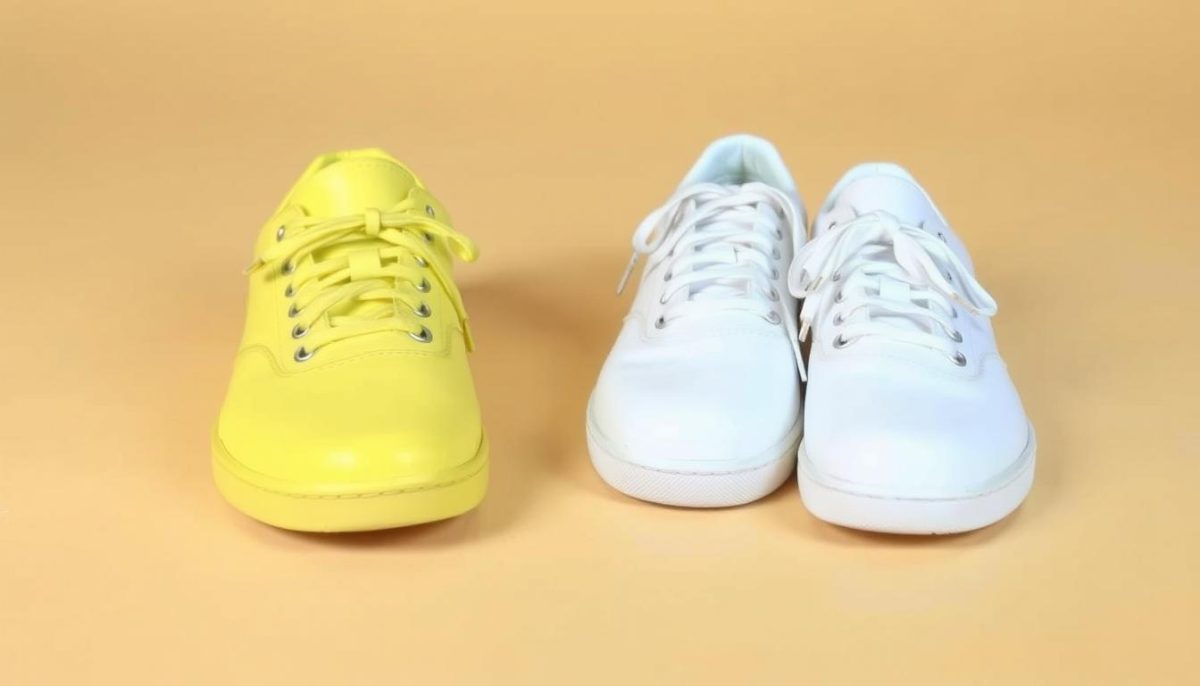
Did you know that white shoes can turn yellow due to dirt, sweat, and aging? This common issue can be frustrating, especially if you have invested in a pair of stylish white shoes. The good news is that there are simple and effective ways to restore their original brightness.
Restoring your yellow soles to their former glory is easier than you think. With 7 easy and safe methods, you can whiten yellow soles and make your shoes look like new again. In this article, we will explore these methods in detail, helping you to learn how to unyellow shoes effectively.
Key Takeaways
- Learn 7 easy and safe methods to restore your white shoes.
- Understand the causes of yellowing and how to prevent it.
- Discover simple household items that can help whiten yellow soles.
- Follow step-by-step guides to unyellow your shoes.
- Maintain your white shoes to keep them looking new.
Why Do White Shoes Turn Yellow?
Have you ever wondered why your once pristine white shoes have taken on a yellowish hue over time? The yellowing of white shoes is a common issue that affects many of us, and it’s not just about aesthetics; understanding the reasons behind this discoloration can help in finding the right solution.
The Science of Oxidation
Oxidation is a primary factor in the yellowing of white shoes. When the materials used in your shoes come into contact with oxygen, a chemical reaction occurs that can cause discoloration. This process is accelerated by factors such as heat, light, and moisture. For instance, the rubber parts of your shoes, like the sneaker soles, are particularly prone to reverse oxidation due to their composition.
Environmental Factors
Environmental factors play a significant role in the yellowing process. Exposure to sunlight, dirt, and pollutants can all contribute to the discoloration of your white shoes. UV rays from the sun can cause the materials to degrade and change color, while dirt and pollutants can leave stubborn stains that are hard to remove.
Material Considerations
The type of material your shoes are made of also influences their tendency to turn yellow. For example, rubber and certain synthetic materials are more prone to yellowing than others. Understanding the material composition of your shoes can help you take preventive measures and choose the right cleaning methods.
| Material | Prone to Yellowing | Prevention Tips |
|---|---|---|
| Rubber | High | Avoid direct sunlight, clean regularly |
| Leather | Moderate | Use leather conditioner, avoid harsh chemicals |
| Synthetic | High | Use gentle cleaning products, avoid extreme temperatures |
By understanding the causes of yellowing, including oxidation, environmental factors, and material considerations, you can take steps to prevent or mitigate this issue, keeping your white shoes looking their best for longer.
What You’ll Need Before Starting
To effectively restore your white shoes to their original glory, you’ll need to prepare the right cleaning supplies and equipment. This preparation is crucial for achieving the best results and ensuring your safety during the cleaning process.
Essential Cleaning Supplies
Before diving into the cleaning process, it’s essential to gather the necessary cleaning supplies. These may include:
- A soft-bristled brush or an old toothbrush for gently scrubbing away dirt and yellow stains.
- A mild detergent or a specialized shoe cleaning solution that is suitable for your shoe material.
- Baking soda for its natural abrasive and whitening properties.
- Hydrogen peroxide or a commercial shoe whitening product for tough yellowing.
Protective Gear
Protecting yourself is just as important as preparing your cleaning supplies. Consider using:
- Gloves to prevent skin irritation from cleaning agents.
- Goggles or protective eyewear to safeguard your eyes from splashes.
- A mask to avoid inhaling fumes from strong cleaning solutions.
Workspace Preparation
Preparing your workspace can significantly impact the effectiveness and safety of your cleaning process. Ensure:
- Your workspace is well-ventilated to prevent the accumulation of fumes.
- The area is clear of clutter and protected with old newspapers or a plastic tablecloth.
- You have access to water for rinsing and mixing your cleaning solutions.
By having the right cleaning supplies, wearing protective gear, and preparing your workspace, you’ll be well-equipped to tackle the task of unyellowizing your shoes effectively and safely.
Method1: Baking Soda and Detergent Paste
To tackle yellowed soles, consider the simple yet effective method of applying a baking soda and detergent paste. This technique is not only easy to follow but also utilizes common household items, making it a convenient first step in restoring your white shoes.
Creating the Cleaning Paste
To create the paste, you’ll need to mix baking soda with a mild detergent. The recommended ratio is 1 tablespoon of baking soda to 1 tablespoon of detergent. Gradually add a small amount of water to form a smooth, thick paste. The mixture should be free of lumps and have a consistent texture.
Application Process
Apply the paste to the yellowed areas using a soft-bristled brush or an old toothbrush. Gently scrub the paste into the material, ensuring it’s fully coated. For tougher stains, you can let the paste sit for about 30 minutes before proceeding.
Rinsing and Drying
Rinse the shoes gently with cold water to remove the paste. Use a clean, damp cloth to wipe away any remaining residue. Allow the shoes to air dry, away from direct sunlight, which can cause further discoloration.
Best for Which Shoe Materials
This method is particularly effective for shoes made from canvas, mesh, or synthetic materials. However, it’s not recommended for leather or suede, as the baking soda can be abrasive and potentially damage these materials.
- Easy to prepare with household items
- Gentle on most synthetic shoe materials
- Effective at removing surface yellowing
Method2: Hydrogen Peroxide Solution
If you’re dealing with stubborn yellowing, consider using a hydrogen peroxide solution to revive your shoes. This method is effective for certain types of materials and, when done correctly, can significantly reduce discoloration.
Mixing the Solution Safely
To create the hydrogen peroxide solution, you’ll need to mix hydrogen peroxide with water. The typical ratio is 1 part hydrogen peroxide to 2 parts water. However, this can be adjusted based on the severity of the yellowing and the material of your shoes. It’s crucial to mix the solution in a well-ventilated area and wear gloves to avoid skin irritation.
Application Techniques
Apply the hydrogen peroxide solution to the yellowed areas using a soft-bristled brush or a clean cloth. Gently scrub the solution into the material, ensuring you cover the entire affected area evenly. For more precise application, you can use a cotton swab for smaller areas or intricate designs.

Exposure Time and Considerations
The solution should be left on the shoes for about 30 minutes to an hour, depending on the material and the extent of yellowing. It’s essential to monitor the shoes during this time to avoid overexposure, which can lead to further damage or discoloration.
Suitable Shoe Types
This method is particularly effective for shoes made from leather or synthetic materials that are not severely damaged. However, it’s not recommended for shoes with delicate fabrics or those that have been treated with certain finishes that might react adversely with hydrogen peroxide.
When using a hydrogen peroxide solution, it’s crucial to test a small, inconspicuous area first to ensure the solution doesn’t damage the shoe material. By following these steps and considering the type of shoes you have, you can effectively use a hydrogen peroxide solution to whiten your shoes.
Method3: White Vinegar Treatment
For those looking for a non-toxic and eco-friendly method, white vinegar treatment is an effective way to restore your shoes’ original whiteness. White vinegar is a natural cleaner that can help remove yellowing without damaging the material.
Preparing the Vinegar Solution
To start, mix equal parts of water and white vinegar in a bowl. The solution should be mild enough not to damage the shoes but effective in tackling the yellowing. Always test the solution on a small, inconspicuous area first to ensure it doesn’t affect the color or material.
Application Methods
There are two primary methods to apply the vinegar solution: using a soft cloth to gently rub the solution onto the yellowed areas or soaking the shoes in a mixture of water and white vinegar. For tougher stains, soaking might be more effective, but be cautious not to soak the shoes for too long to avoid damaging the glue or other components.
Neutralizing the Smell
One of the downsides of using white vinegar is the strong smell it leaves behind. To neutralize this, you can use baking soda. After rinsing the shoes, sprinkle some baking soda inside and let them sit overnight. The baking soda will absorb the vinegar smell, leaving your shoes fresh.
Ideal for These Materials
White vinegar treatment is particularly effective for shoes made of leather, suede, and nubuck. However, it’s crucial to test it on a small area first, as the acidity in vinegar can affect different materials in various ways. For synthetic materials, this method can also be effective, but the results may vary.
| Material | Effectiveness of White Vinegar | Precautions |
|---|---|---|
| Leather | High | Test on a small area first |
| Suede/Nubuck | Moderate to High | Avoid soaking; gentle application |
| Synthetic | Variable | Test on a small area; may not be as effective |
Method4: Toothpaste Whitening Technique
Whitening shoes with toothpaste is an unconventional yet surprisingly effective technique. This method is particularly appealing due to its simplicity and the common availability of toothpaste.
Selecting the Right Toothpaste
Not all toothpastes are created equal when it comes to whitening shoes. It’s essential to select a toothpaste that is non-gel and contains baking soda, as these characteristics make it more effective for removing yellowing from shoe surfaces.
- Look for toothpaste with mild abrasives.
- Avoid toothpaste with harsh chemicals or gel formulas.
- Baking soda-based toothpaste is recommended for its whitening properties.
Application and Scrubbing Process
To apply the toothpaste, start by dabbing a small amount onto the yellowed area. Use a soft-bristled toothbrush to gently scrub the area in circular motions. Be sure to cover the entire affected area evenly.
- Apply toothpaste to the yellowed area.
- Scrub gently with a soft-bristled toothbrush.
- Rinse with cold water.
Cleaning and Finishing
After scrubbing, rinse the shoe with cold water to remove the toothpaste. Use a clean cloth to wipe away any remaining residue. For best results, let the shoe air dry.

Best Applications
The toothpaste whitening technique is particularly effective for canvas and rubber shoes. However, it’s crucial to test a small, inconspicuous area first to ensure the toothpaste doesn’t damage the material.
- Canvas shoes: Effective for removing yellowing.
- Rubber shoes: Can help restore original color.
- Avoid using on suede or leather shoes.
Method5: Bleach Solution (With Caution)
Using a bleach solution is a method that demands caution and precision to safely remove yellowing from shoes. While bleach can be effective, it’s crucial to understand the risks and take necessary precautions to avoid damaging your shoes or causing harm to yourself.
Safety Precautions
Before applying a bleach solution, ensure you’re working in a well-ventilated area to avoid inhaling harsh fumes. Wear protective gloves and eyewear to prevent skin and eye irritation. It’s also advisable to wear old clothing or an apron to protect against accidental splashes.
As noted by cleaning experts, “Bleach can be a powerful cleaning agent, but it requires respect and caution.”
“Always handle bleach with care, as it can cause serious damage if not used properly.”
Dilution Ratios
The correct dilution ratio for a bleach solution varies depending on the type of bleach and the material of your shoes. Generally, a 1:5 or 1:10 dilution ratio is recommended. However, it’s essential to check the manufacturer’s instructions for specific guidance.
Application Process
To apply the bleach solution, use a soft-bristled brush or a clean cloth to gently scrub the yellowed areas. Avoid applying too much pressure, which can damage the material. Let the solution sit for a few minutes before rinsing thoroughly with cold water.
Materials to Avoid
Bleach is not suitable for all materials. Avoid using bleach on suede, nubuck, or any shoes with leather or fabric that may be damaged by bleach. Always test a small, inconspicuous area first to ensure the solution doesn’t cause discoloration or damage.
By following these guidelines and exercising caution, you can effectively use a bleach solution to remove yellowing from your shoes.
Method6: UV Light Treatment for How to Unyellow Shoes
The use of UV light in whitening shoes has gained popularity due to its effectiveness and simplicity. This method involves exposing the yellowed areas of your shoes to UV light, which breaks down the oxidation causing the discoloration.
The Science Behind UV Whitening
UV light treatment works by targeting the chromophores responsible for the yellowing. UV light breaks down these molecules, restoring the original whiteness. This process is known as photodegradation.
Creating a DIY Sole Bright Solution
To enhance the UV whitening process, you can create a DIY Sole Bright solution. Mix equal parts of water and a mild detergent in a spray bottle. Spray this solution onto the yellowed areas before exposing them to UV light. The detergent helps in breaking down the chromophores more effectively.
Application and Exposure Process
Place your shoes in direct sunlight or under a UV lamp. If using sunlight, ensure the shoes are exposed for at least 2-3 hours a day. For a UV lamp, follow the manufacturer’s guidelines for distance and exposure time. Regularly check the progress and adjust the exposure as needed.
Safety Considerations
When using UV light treatment, it’s crucial to take safety precautions. Wear UV protective eyewear to avoid eye damage. Also, ensure the area is well-ventilated if you’re using a UV lamp indoors. Avoid overexposure, as it can cause material degradation.
Method7: Commercial Shoe Cleaners
For those who prefer a more straightforward approach, commercial shoe cleaners offer a convenient solution to unyellowing shoes. These products are specifically designed to tackle the toughest stains and discoloration, making them an effective option for many consumers.
Top Products for Whitening
Some of the top-rated commercial shoe cleaners for whitening include:
- Jason Markk Premium Shoe Cleaner: Known for its gentle yet effective formula.
- Sneaker Cleaner by Crep Protect: Offers a comprehensive cleaning solution for various sneaker materials.
- Reshoevn8r Sneaker Cleaning Kit: Provides a kit that includes a cleaner and brush, ideal for detailed cleaning.
These products have gained popularity for their ability to restore shoes to their original whiteness without damaging the materials.
Application Instructions
When using commercial shoe cleaners, it’s essential to follow the application instructions provided with the product. Generally, the process involves:
- Applying the cleaner to the yellowed area using a soft-bristled brush.
- Gently scrubbing the area to work the cleaner into the material.
- Rinsing the shoes with cold water to remove the cleaner.
- Allowing the shoes to air dry, away from direct sunlight.
Cost vs. Effectiveness
The cost of commercial shoe cleaners can vary significantly, ranging from under $10 to over $30, depending on the brand and quantity. While more expensive products might offer specialized formulas or larger quantities, there are effective options available at various price points.
“The key to choosing the right commercial cleaner is understanding the material of your shoes and selecting a product that is compatible.”
Professional Recommendations
Professionals in the shoe care industry often recommend using commercial cleaners that are specifically designed for the type of material you’re dealing with. For instance, cleaners for leather might differ from those for synthetic materials or mesh.
By choosing the right commercial shoe cleaner and following the application instructions, you can effectively remove yellowing from your shoes and keep them looking their best.
Preventing Future Yellowing
The key to keeping your shoes white is prevention, and there are several strategies you can employ. By adopting a few simple habits, you can maintain the whiteness of your shoes for a longer period.
Proper Storage Techniques
How you store your shoes can significantly impact their color and overall condition. Store your white shoes in a cool, dry place away from direct sunlight, as UV rays can cause yellowing. Use shoe bags or boxes that allow for airflow to prevent moisture buildup.
Regular Maintenance
Regular cleaning is crucial to prevent yellowing. Clean your shoes gently but thoroughly after each wear to remove dirt and debris that can cause discoloration. For tougher stains, consider using a gentle cleaning product specifically designed for your shoe material.
- Inspect your shoes regularly for signs of wear.
- Clean them as needed to prevent dirt buildup.
- Apply a whitening or brightening product periodically to maintain their appearance.
Protective Sprays and Coatings
Applying protective sprays or coatings can provide an additional layer of defense against yellowing. Look for products that offer UV protection and water repellency to keep your shoes looking fresh and clean. These products can be applied periodically to maintain their effectiveness.
| Product Type | Benefits | Application Frequency |
|---|---|---|
| UV Protective Spray | Prevents yellowing, water repellent | Every 2-3 months |
| Water Repellent Coating | Protects against stains, easy cleaning | Every 6 months |
By combining proper storage, regular maintenance, and the use of protective products, you can significantly reduce the risk of yellowing and keep your white shoes looking their best.
Conclusion
Unyellowing your shoes is not just about aesthetics; it’s also about maintaining their quality and extending their lifespan. The 7 methods outlined in this article provide you with a range of options to safely restore your shoes.
By using the right techniques and materials, you can effectively remove yellowing and prevent it from happening again. Whether you’re dealing with a favorite pair or a new acquisition, proper shoe care is essential.
Regular maintenance, including cleaning and applying protective sprays, can make a significant difference in keeping your shoes looking their best. By incorporating these simple practices into your routine, you’ll be able to enjoy your shoes for a longer period.
Now that you’re equipped with the knowledge to unyellow your shoes, it’s time to put these methods into practice. With a little care and attention, your shoes can regain their original brightness and remain in great condition.
FAQ
Why do my white shoes turn yellow over time?
Can I use bleach to whiten my yellowed shoes?
How can I prevent my white shoes from turning yellow?
Is it safe to use hydrogen peroxide on all types of shoe materials?
Can I use toothpaste to whiten my shoes?
How do I clean yellowed soles without damaging them?
Are commercial shoe cleaners effective for whitening yellowed shoes?
Can UV light treatment damage my shoes?
How often should I clean my white shoes to prevent yellowing?
Can I use white vinegar to clean my shoes?

Want your laundry picked up?
Easy Life Laundry collects from your hotel, apartment or office in 41 Chinese cities, washes, dries and folds by the kilo, and brings everything back — usually the next day. English-speaking service, itemised bills and photo updates.


